

 Contact us
 Visit CPRE.org
 Donate
Join our Campaign to Protect the South West Hampshire Green Belt
The countryside on the edge of towns and cities supports nature, climate and our everyday lives. Yet without action, growing pressures on these places risk losing enormous future benefits.
The countryside on the edges of our towns and cities is some of the most pressured and overlooked lands in England – facing neglect, lack of investment, unsustainable development and too little protection.
Yet these fields, farms, paths, woods and scrublands hold extraordinary potential.
Our ‘edgelands’ could play a vital role in tackling the nature and climate crises – helping nature recover, sustaining local food systems, shielding communities from flooding and heat, and offering millions of people access to nature close to home.
Most people believe we can build new homes and protect nature at the same time, but as demands on land intensify, the countryside next door is too often planned to become grey not greener.
Nearly nine in ten people in Britain say protecting the countryside for future generations matters to them. Yet more than half believe it will be less well protected in ten years’ time. They’re right to be concerned.
Hampshire has one designated Green Belt, the ‘Southwest Hampshire Green Belt’ which was designated to prevent urban sprawl along the coast from Bournemouth and Christchurch. There are 5 key purposes of a Green Belt these are:
- to check the unrestricted sprawl of large built-up areas.
- to prevent neighbouring towns merging into one another.
- to assist in safeguarding the countryside from encroachment.
- to preserve the setting and special character of historic towns; and
- to assist in urban regeneration, by encouraging the recycling of derelict and other urban land.
This Green Belt is set to turn grey and if you, like CPRE Hampshire, don’t want this to happen now is the time to act.
There is one more week to go before the consultation on the Local Plan being prepared by New Forest District Council closes on the 20th March 2026.
We are calling on individuals and groups across the New Forest to make your voices heard.
The new study into the South Hampshire Green Belt prepared by LUC for New Forest District Council identified 17 areas in the existing Green Belt which the study is recommending reclassifying as grey belt, leaving these areas vulnerable to development proposals and therefore much less protected.
These sites vary in size. In the West of the New Forest a site stretching from Sopley, along the River Avon to Avon Tyrell and North Ripley has been identified.
In the South of the New Forest an area stretching from Downton (the Royal Oak) joining Everton and Milford has been included.
The long-term implications of these changes will result in urban sprawl from Lymington through to Poole.
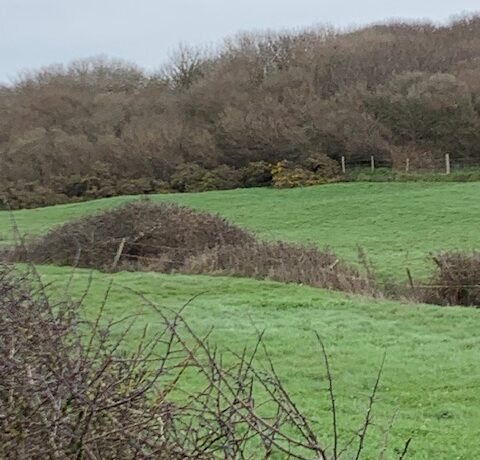
If you value the countryside on the coast, if you would prefer to see agricultural fields full of lambs in the springtime …. make your voice heard.
Once a Local Plan is approved it is much harder to successfully challenge individual planning applications …now is the time for action.
To respond to the Local Plan consultation, visit https://www.newforest.gov.uk/localplan
What is the solution?
CPRE are calling on the government to:
- change its definition of ‘grey belt’ in national planning policy, and restore the pre-existing protections of designated Green Belt land;
- change national planning policy so that once planning consent has been granted, it must be built within a reasonable timeframe or else sanctions should be applied;
- implement a “brownfield first” policy with real teeth in it, so these redevelopment and regeneration opportunities are not continually deferred and left unbuilt; and
- bring long term empty homes back into occupancy as soon as possible, so these dwellings can be utilised and are not just a waste of space.
We want to see all of these measures in place before eroding and diminishing the Green Belt, as is currently happening.
The Green Belt is one of England’s outstanding achievements
Campaigners in the late 19th and early 20th centuries called for a “green belt” around large population centres to prevent the loss of countryside to urban sprawl. This was achieved in 1938 with the passage of the Metropolitan Green Belt Act, one of CPRE’s early successes.
The Green Belt is the countryside next door for millions of people all across England, providing access to nature and wildlife, clean air, tranquillity, and space for recreation. The Green Belt – and green spaces more generally – are essential for our health and well-being, and for helping to mitigate climate change and the loss of biodiversity and threatened species. And there is near universal support for protecting the countryside, with 86% of Britons in support of the Green Belt according to a recent poll by More in Common.
Now, with the government’s current ‘grey belt’ policy we are all seated in the front row watching a slow-motion tragedy unfold, as ever more Green Belt land is being lost to development. In a few years’ time, it is possible that there will be development from Poole right along the coastal strip as far as Lymington and its conurbation will have engulfed the Hampshire coastline, and those of us who live in towns and villages will find that we are instead residing in the middle of endless development sprawl.
Take action
Please join us in our campaign to get the government to change its definition of ‘grey belt’. Share this article with your MP and your local Councillor and tell them how upset you are about the government’s current approach.